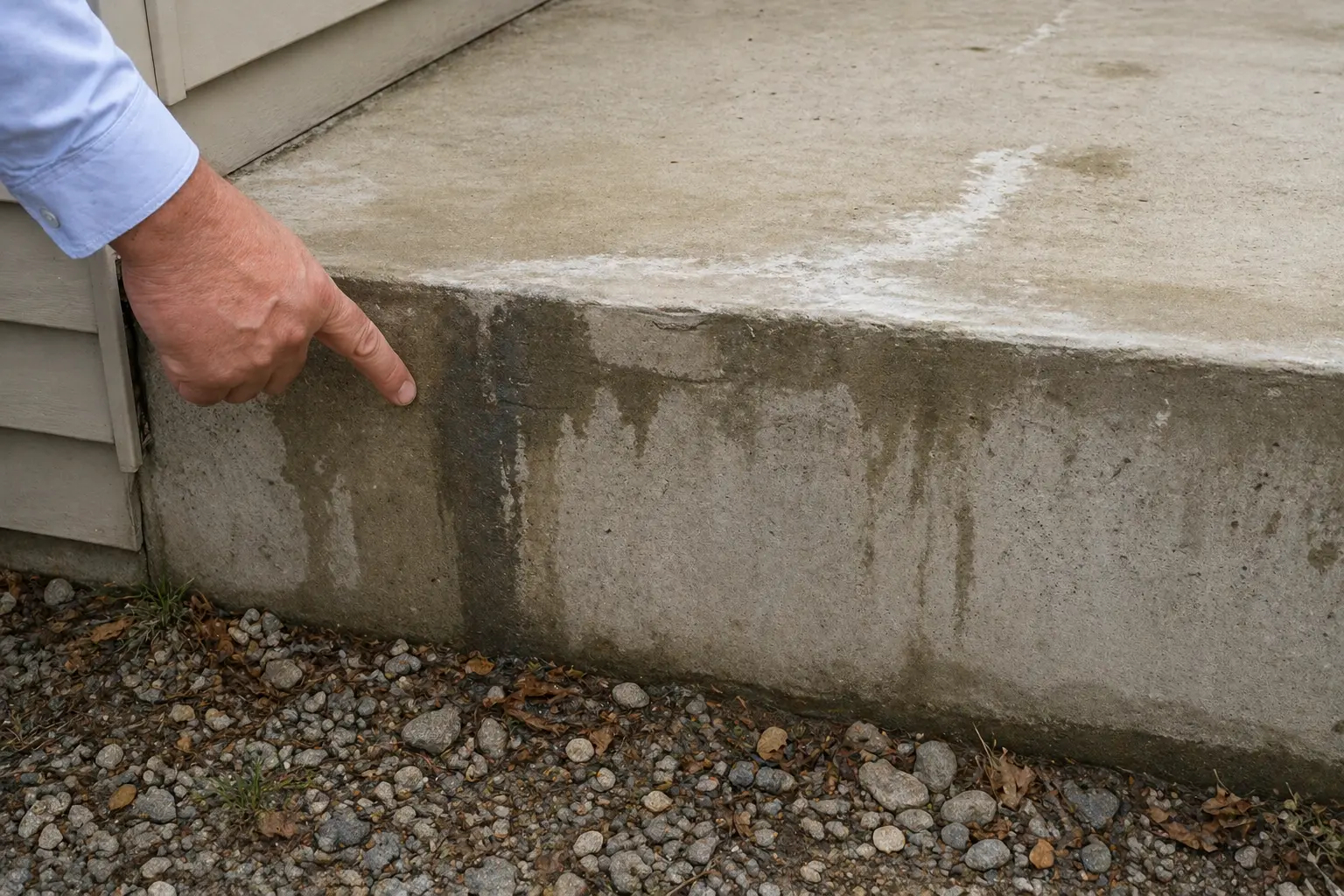
Slab leaks are pressurized water lines failing beneath your concrete foundation. We pinpoint them within inches and give you a written report any plumber can act on.
Slab leaks are one of the most expensive plumbing failures a Texas homeowner can face — not because the leak itself is dramatic, but because the repair touches the floor, the foundation, and sometimes the structure of the house.
A slab leak is a pressurized water line failing inside or beneath the concrete slab your home was built on. In North Texas, where expansive clay soil shifts with every drought-and-rain cycle, slab leaks are not rare. They're routine. And the difference between a $1,500 repair and a $15,000 repair almost always comes down to one thing: how accurately the leak was located before anyone broke the concrete.
The soil under most Tarrant, Johnson, Hood, and Parker County homes is rich in clay. Clay absorbs water when it rains and shrinks when it dries. Over years, that movement stresses the copper or PEX lines running through the slab — the lines bend, abrade against rebar or rock, and eventually fail.
Other common causes:
If your home was built between 1960 and 1995 in North Texas, slab leaks are a possibility you should plan for, not be surprised by.
Locating a slab leak is the most technically demanding work in residential leak detection, because the leak is buried in concrete — it has to be located accurately on the first pass, before any concrete is touched.
The process:
A properly located slab leak should be repairable through a single small cut in the concrete — typically less than a square foot of work.
Once the leak is pinpointed, you get a written report with the marked location, line type, depth, and a clear repair scope, formatted so any licensed plumber can act on it without re-running diagnostic work. Hand it to your plumber, or we can suggest a vetted plumber. You can also choose RGC's Construction Management service if you want the repair managed end-to-end.
The same report works for insurance. Most homeowners' policies cover the cost of detection and the access work to reach a slab leak, even when the pipe repair itself isn't covered, and our written documentation is formatted to make that claim straightforward.
If you suspect a slab leak, get it located before more water gets under the foundation. The detection call costs a fraction of what additional foundation damage would.
If something’s not covered here, call. The phone consult is the same five minutes whether you book a job or not.
Within a few inches on most pressurized supply lines. The acoustic gear picks up the high-frequency sound water makes when it escapes the pipe wall, and we cross-reference the signal across multiple sensor positions. Thermal imaging confirms when hot-water lines are involved.
No. The whole point of acoustic detection is that it's non-invasive. We listen through finished surfaces and confirm with thermal — the only thing we cut into is the time you'd have lost guessing.
Most jobs wrap up in two hours from the time Ralph arrives, including the walkthrough, acoustic sweep, thermal confirmation, marking the spot, and writing the report. Larger properties or trickier leaks can run longer; you'll know upfront.
No, a leak only makes acoustic noise when water is moving through it. We do most of the work with the system pressurized; if the leak is intermittent, we may run controlled pressurization tests during the visit to bring the signature out.
If someone is on-site during the inspection, they must be 18 years of age or older to grant access and walk through what we're seeing. We prefer to have you (or another adult representative) there for the start and the handoff. If no one can be there, we'll work with whoever is coordinating the visit.
Tell us what you're seeing. Five-minute call, flat estimate, same-week scheduling. If RGC isn't the right fit, Ralph will tell you straight.
Voicemail? Ralph calls back the same day.
Tell us what you're seeing. We'll text or call back within the hour.