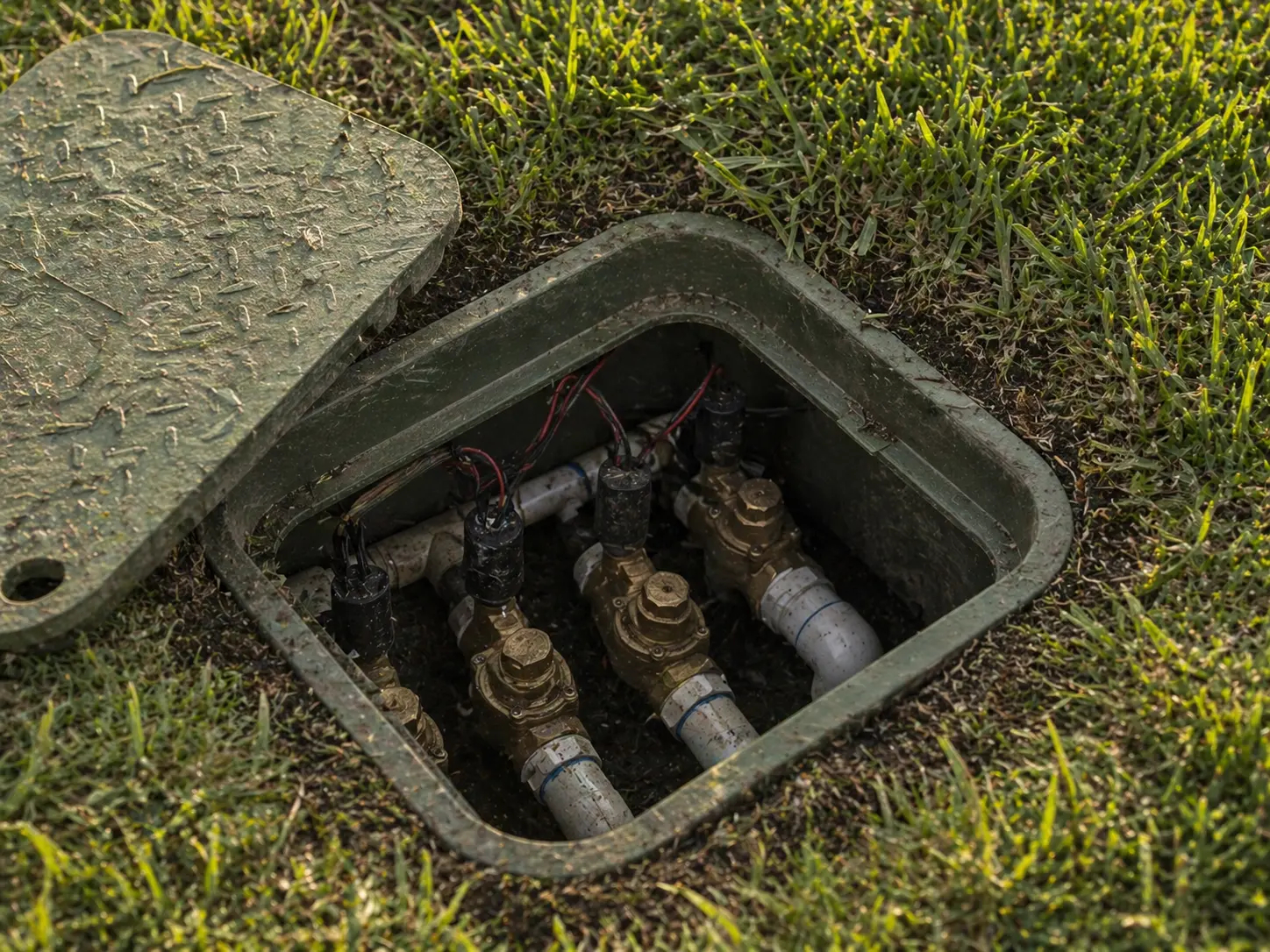
Underground sprinkler and main line leaks waste thousands of gallons before you see anything on the surface. We locate them and give you a written report any irrigation tech can act on.
Irrigation leaks are sneaky. By the time the symptoms reach the surface — a soggy patch in the lawn, a sudden brown spot, a water bill that doubled — the underground line has often been leaking for weeks. A single half-inch crack in a main irrigation line can dump several thousand gallons a month into the ground without any visible spray.
RGC locates underground sprinkler and irrigation leaks across the Fort Worth area using the same acoustic and pressure-testing methods we use for indoor plumbing — adapted for the realities of buried PVC lines, valve manifolds, and zone controllers.
Each location requires a different detection approach, and a system can have leaks in more than one place at once.
The process is similar to indoor leak detection but uses different tools:
Once we mark the leak, you get a written report with the leak location, depth, line type, and recommended repair scope, so you can work with the irrigation technician of your choice.
If your water bill jumped during the summer and your sprinkler system is on, an irrigation leak is one of the first places to look. The longer it runs, the more it costs — both in water and in any landscape damage from saturated soil.
If something’s not covered here, call. The phone consult is the same five minutes whether you book a job or not.
Within a few inches on most pressurized supply lines. The acoustic gear picks up the high-frequency sound water makes when it escapes the pipe wall, and we cross-reference the signal across multiple sensor positions. Thermal imaging confirms when hot-water lines are involved.
No. The whole point of acoustic detection is that it's non-invasive. We listen through finished surfaces and confirm with thermal — the only thing we cut into is the time you'd have lost guessing.
Most jobs wrap up in two hours from the time Ralph arrives, including the walkthrough, acoustic sweep, thermal confirmation, marking the spot, and writing the report. Larger properties or trickier leaks can run longer; you'll know upfront.
No, a leak only makes acoustic noise when water is moving through it. We do most of the work with the system pressurized; if the leak is intermittent, we may run controlled pressurization tests during the visit to bring the signature out.
If someone is on-site during the inspection, they must be 18 years of age or older to grant access and walk through what we're seeing. We prefer to have you (or another adult representative) there for the start and the handoff. If no one can be there, we'll work with whoever is coordinating the visit.
Tell us what you're seeing. Five-minute call, flat estimate, same-week scheduling. If RGC isn't the right fit, Ralph will tell you straight.
Voicemail? Ralph calls back the same day.
Tell us what you're seeing. We'll text or call back within the hour.