A slab leak hides under your foundation and runs for weeks before you notice. Here are the 7 warning signs every North Texas homeowner should know — and why our clay soil makes them worse.
A slab leak is a water line failing underneath your concrete foundation. You can't see it. You usually can't hear it. And by the time most homeowners notice, the water has been running for weeks.
The good news: your house gives you signs before the damage gets expensive. You just have to know what to look for.
I've spent forty years building and remodeling homes across North Texas. I've seen the same leaks show up in the same kinds of houses, year after year. Here's how to catch one early — before it cracks your floor or floods a room.
Most of Tarrant and Johnson County sits on expansive clay soil. That clay swells when it's wet and shrinks when it's dry. After a Texas summer of drought followed by a heavy fall rain, the ground under your house moves — sometimes inches.
Your foundation moves with it. So do the copper and PEX water lines running through and under that slab. Enough movement, enough seasons, and a joint gives or a line wears a hole against the concrete.
That's why slab leaks aren't rare here. They're a regular part of owning a slab-on-grade home in North Texas. Knowing the warning signs is half the battle.
Here are the signals we get called about most. One of these alone might not mean a slab leak. Two or three together usually does.
This is the most common first clue. Same household, same habits, but the bill jumps $40, $80, or more. A pressurized line under your slab can leak hundreds of gallons a day without a drop reaching the surface.
Turn everything off. Stand still in a quiet house. If you hear a faint hiss or rush of water, that's pressurized water moving through a line it shouldn't be.
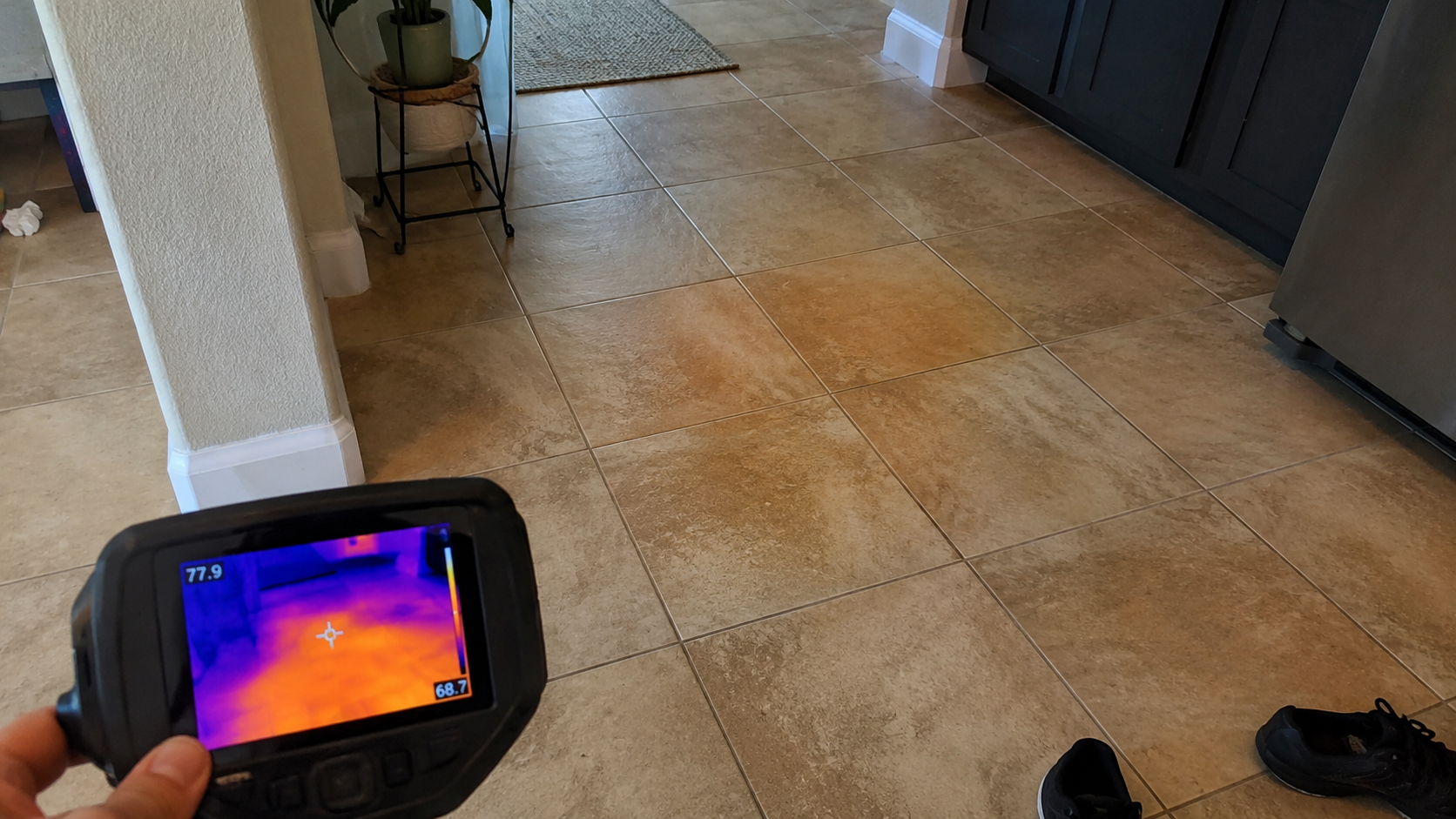
Walk your floors barefoot. A patch of tile or laminate that's warmer than everything around it points to a hot water line leaking underneath. This one is a strong tell.
A single hairline crack is normal in North Texas. But new cracks in tile, drywall, or grout — especially several at once — mean your foundation is on the move. That movement both causes slab leaks and gets worse because of them.
Wood that's cupping. Tile that's loose. Carpet with a damp patch that won't dry. Water under the slab has nowhere to go but up.
Trapped moisture grows mold. If a room smells musty no matter how much you clean, water may be sitting under the floor or inside the wall.
When water is escaping underground, less of it reaches your showerhead and faucets. A whole-house pressure drop with no other explanation is worth a look.
Don't panic, and don't start breaking concrete to “find it yourself.” Here's the right order:
We don't guess, and we don't tear up your house to go looking. We use professional-grade LeakTronics acoustic equipment to listen for water moving through the pipe — even under a slab. A leak only makes noise when water is actively flowing, so we listen for that flow and trace it to the source. Thermal imaging confirms warm or cold spots when it helps.
Most residential inspections across Tarrant and Johnson County are done in a single visit, usually inside two hours. You leave with the exact location marked and clear documentation a plumber, adjuster, or buyer can act on.
Most residential leak inspections in our area run between $300 and $650, depending on the size of the home and how complex the leak is. You get a flat estimate before we start. No hourly surprises, no add-ons mid-job.
One thing worth saying plainly: detection is cheaper than damage. A slab leak caught this month is a pinpoint repair. The same leak ignored for a season is rotted flooring, a foundation problem, and a much bigger bill.
How do you find a slab leak without breaking the concrete?
We use acoustic listening equipment that hears water moving through the pipe wall, even under the slab, paired with thermal imaging. Neither requires demolition. We mark the exact spot so the repair stays small.
Will my homeowner's insurance cover a slab leak?
Many policies cover the detection and the resulting water damage as part of a claim, even when the pipe repair itself isn't covered. We provide the written documentation adjusters expect: photos, readings, exact location, and a plain-language summary. We don't bill insurance directly — you pay us, and we hand you what you need to file.
How fast can you come out?
Same-week scheduling is normal across Tarrant and Johnson County, and same-day is sometimes possible. If your leak is actively flooding, call and we'll tell you the truth about when we can be there.
Do you repair the leak too?
No. RGC does detection and documentation only. Your licensed plumber handles the repair. Keeping detection separate keeps the diagnostic sharp and keeps us honest — we have no reason to oversell a repair we don't do.
Does someone need to be home?
If someone is on-site, they need to be 18 or older to grant access and walk the property with us. If no one can be there, we'll coordinate with whoever's handling the visit.
Tell us what you're seeing — warm floor, cracked tile, water bill that doubled. It's a five-minute call and a flat estimate. Same-week scheduling across Tarrant, Johnson County, and the surrounding areas.
Call 817-406-1567 for a free estimate.
Tell us what you're seeing. Five-minute call, flat estimate, same-week scheduling. If RGC isn't the right fit, Ralph will tell you straight.
Voicemail? Ralph calls back the same day.
Tell us what you're seeing. We'll text or call back within the hour.